

Chronic Pain Management for Providers
Chronic Pain Management (CPM) is a CMS-defined monthly care program designed to help physicians and qualified healthcare professionals manage patients living with persistent or recurring pain. Built around HCPCS codes G3002 and G3003, CPM bundles validated pain assessment, person-centered care planning, medication management, and multidisciplinary coordination. Clinii allows practices to implement CPM through automated time capture, care plan documentation, and seamless EHR integration.
What is Chronic Pain Management?
Chronic Pain Management (CPM) is a monthly bundle of services for Medicare patients living with persistent or recurring pain. The bundle covers pain assessment, a person-centered care plan, medication management, behavioral health and care coordination, and crisis care when needed.
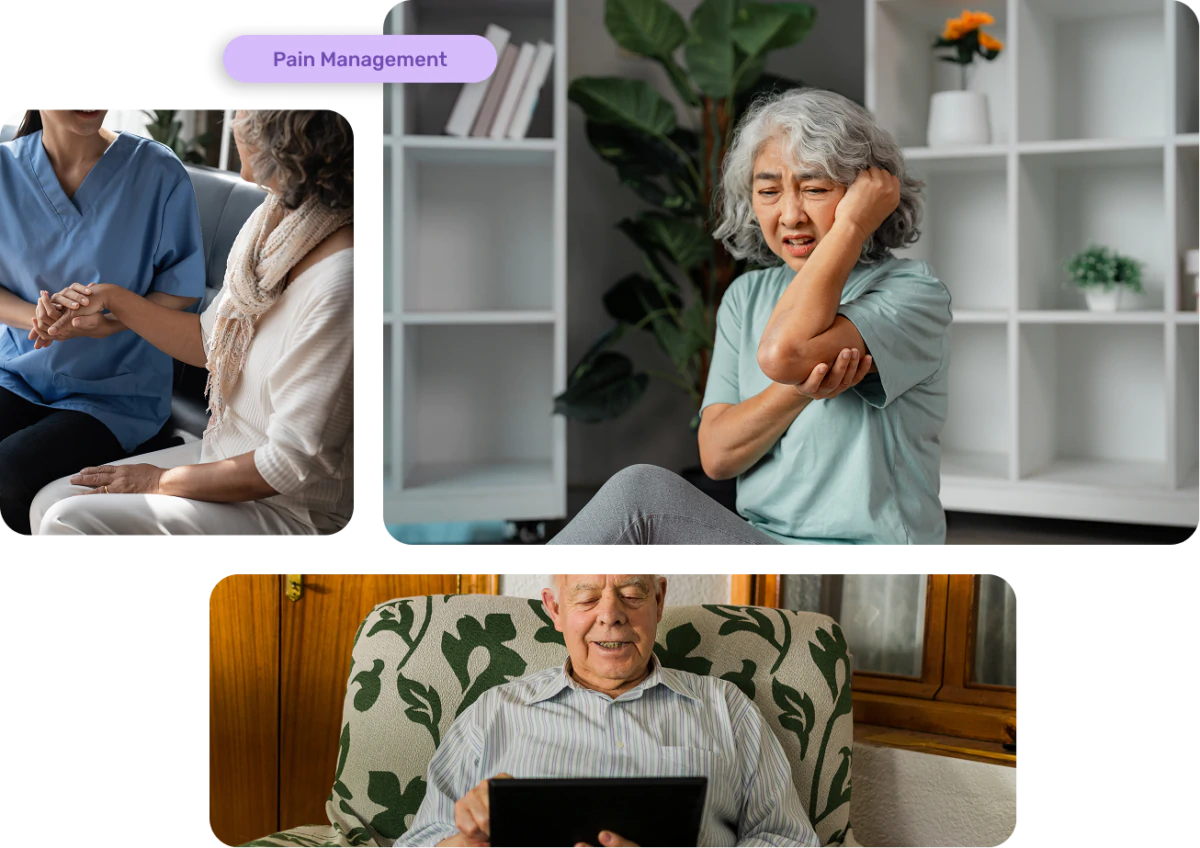
Primary Aims of Chronic Pain Management
Improve Function and Quality of Life
CPM gives chronic pain patients structured, longitudinal management between in-person visits. Monthly reassessment of pain and function, paired with care plan revisions, supports steady progress against goals for activity, sleep, and mood.
Support Safer Medication Management
Chronic pain often involves opioid stewardship, complex regimens, and frequent adjustments. The CPM monthly bundle includes medication management as a core component, so prescribing decisions are made in the context of an ongoing relationship and a documented care plan, not isolated visits.
Coordinate Multidisciplinary Pain Care
Most chronic pain patients are seeing more than one provider: Primary care, behavioral health, PT, OT, and complementary or integrative practitioners. CPM reimburses the work of coordinating across that team, including referrals to community-based care, so coordination time stops being unbillable overhead.
Reduce Crisis Care and Emergency Visits
Crisis care for chronic pain events is included in the monthly bundle. Structured monthly contact and proactive care plan maintenance help catch flares earlier, reducing the likelihood of emergency room visits.
HCPCS Codes
HCPS G3003
Additional 15 minutes of CPM personally delivered by a physician or other qualified healthcare professional (QHP) beyond the first 30 minutes in a calendar month.
Learn MoreKey Benefits

Validated pain assessment

Personally provided, fully documented

Eligible for Medicare reimbursement

EHR integration and automated reporting
Why Clinii is Your Trusted Partner
 Cutting-edge,
AI-powered platform Nationwide, fully compliant
care plan enhancement Proven results: 300%+ care
plan usage, 92% claim approval Seamless EHR
integration
Cutting-edge,
AI-powered platform Nationwide, fully compliant
care plan enhancement Proven results: 300%+ care
plan usage, 92% claim approval Seamless EHR
integration Frequently Asked Questions About Chronic Pain Management
What is Chronic Pain Management (CPM)?
Chronic Pain Management (CPM) is a monthly Medicare benefit for patients with persistent or recurring pain. Each calendar month, a physician or other qualified health professional personally delivers a bundled set of services: Pain assessment, a person-centered care plan, medication management, behavioral health and care coordination, and crisis care when needed. CPM requires an initial face-to-face visit of at least 30 minutes and documented patient consent. Time is billed under HCPCS G3002 (first 30 minutes) and G3003 (each additional 15 minutes, up to four units per month).
Who Can Receive CPM Services?
Patients are eligible if they are under the care of a Medicare-enrolled physician or other qualified health professional, have a chronic pain condition that requires ongoing management, have received an initial face-to-face visit of at least 30 minutes from the billing physician or qualified health professional, and have documented consent in the medical record.
Who Provides CPM Services?
CPM time must be personally provided by a physician or other qualified health professional. This includes physicians (MD, DO), nurse practitioners, physician assistants, clinical nurse specialists, and certified nurse-midwives. Unlike CCM and CHI, the time billed under G3002 and G3003 cannot be delegated to auxiliary personnel, care coordinators, or community health workers.
Can CPM Be Delivered Virtually?
The initial visit must be face-to-face. Subsequent monthly service time can be provided through the modalities appropriate to the clinical situation, including phone and video, as long as the work is personally performed by the physician or qualified health professional and documented in the medical record.
What Type of Consent is Required?
The patient must be informed about the service, any cost-sharing that applies, that only one practitioner can bill CPM per calendar month, and their right to stop services at any time. Consent can be verbal or written and must be documented in the patient’s medical record.
Other Programs
APCM
Advanced Primary Care Management (APCM)
Clinii’s Advanced Primary Care Management (APCM) services provide healthcare teams with the tools and support needed to deliver high-quality, patient-centered care.
Learn moreAWV
Annual Wellness Visit (AWV)
Clinii’s Annual Wellness Visit (AWV) program helps providers deliver preventive care assessments, identify health risks early, and improve Medicare reimbursement efficiency.
Learn moreBHI
Behavioral Health Integration (BHI)
Clinii’s Behavioral Health Integration (BHI) services provide seamless collaboration between primary care providers and mental health specialists, improving access and driving better overall health outcomes.
Learn moreCHI
Community Health Integration (CHI)
Clinii’s Community Health Integration (CHI) program connects patients to local resources, care coordinators, and preventive health initiatives—helping enhance equitable access, patient engagement, and public health outcomes.
Learn morePCM
Principal Care Management (PCM)
For patients managing a single high-risk chronic condition, Clinii’s Principal Care Management (PCM) program provides targeted support, care coordination, and specialist oversight.
Learn moreRPM
Remote Physiological Monitoring (RPM)
Clinii’s Remote Physiological Monitoring (RPM) solutions empower providers to track real-time patient vitals, detect early health risks, and reduce hospital visits through continuous remote monitoring.
Learn moreRTM
Remote Therapeutic Monitoring (RTM)
Clinii’s Remote Therapeutic Monitoring (RTM) solutions enable providers to track medication adherence, respiratory health, musculoskeletal recovery, and behavioral therapy progress remotely.
Learn moreTCM
Transitional Care Management (TCM)
Clinii’s Transitional Care Management (TCM) services support providers in coordinating post-discharge care, optimizing Medicare reimbursements, and improving patient recovery outcomes.
Learn moreVBC
Value-Based Care (VBC)
Clinii’s Value-Based Care (VBC) solutions help providers transition from fee-for-service to outcome-driven reimbursement models.
Learn more